
The Places We Love
What New York taught me about attachment

I wasn’t just in love with New York. I was anxiously attached.
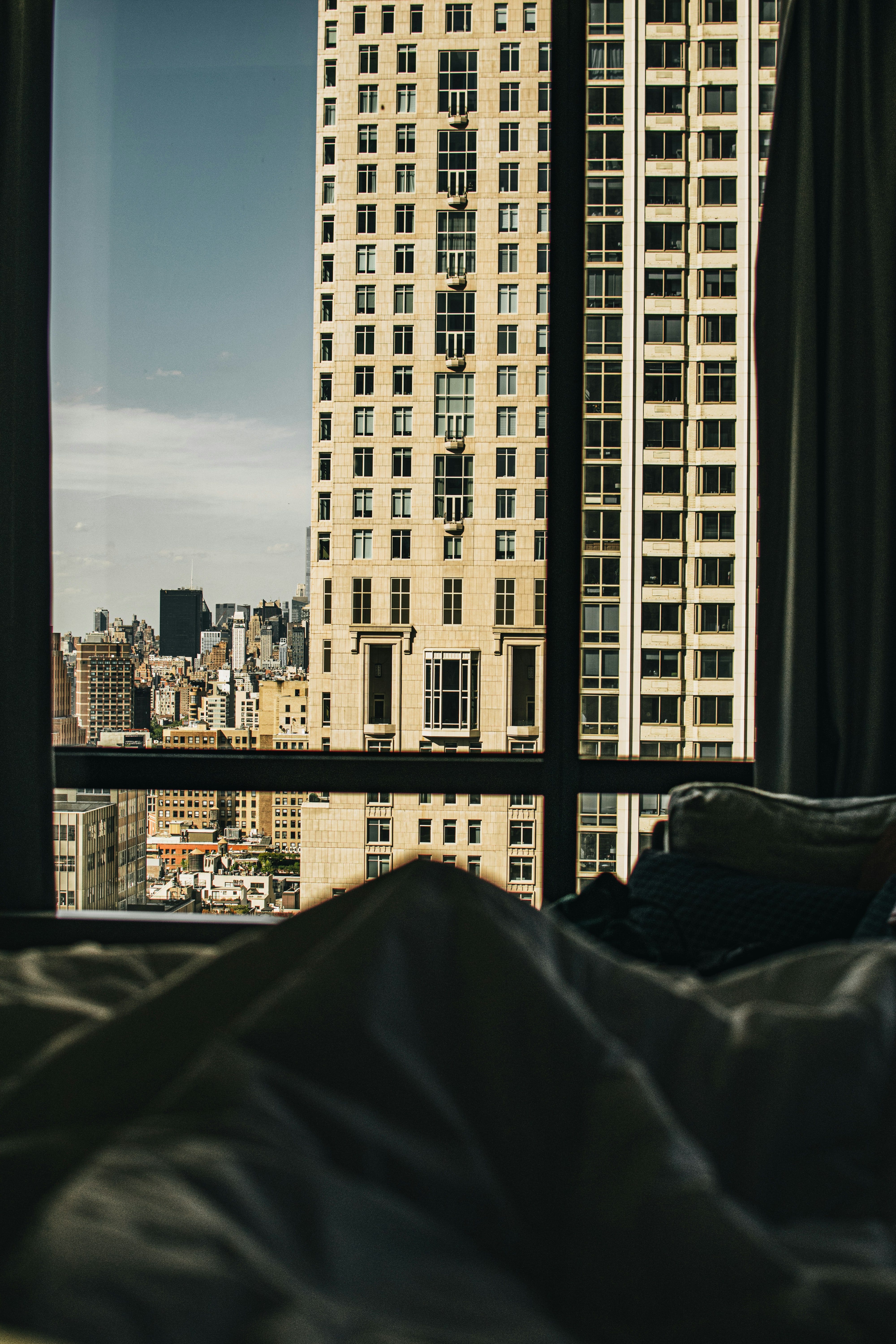
When I went on vacation, I would count the days until I could go home. I felt butterflies in my stomach when we’d drive over a bridge and I’d see the lights of the skyline, waiting for me. I believed New York loved me as much as I loved it, but I still looked for proof. I checked on it. I noticed when the bodega on the corner changed the sign. I mourned when a tree at the Seaport fell after a storm. I measured new apartment towers against the skyline I carried around in my mind. I wanted reassurance that the city I loved would always be there, waiting for me.
I lived there longer than I’d lived in any city in my life. I knew when it was time to leave, but when I came back for a visit, I still found my heart racing as the 2 train decelerated into lower Manhattan.
You know what it feels like to miss a person. But have you ever missed a street? The view outside of a window? The way the floorboards creaked walking up the stairs to your apartment?
In environmental psychology, this is known as place attachment.
As a relational therapist, I spend my days tracking attachment styles and how we respond emotionally to others.
Generally, we can map people’s relational interactions into one of four categories: avoidant, anxious, disorganized, or secure. We think of these attachment styles as interpersonal: they impact when we text back, how we fight, how we show love.
But research is starting to show that our nervous systems might not differentiate as cleanly as we’d think between people and our environment.
The formalized scientific study of our emotional bonds to the places around us is still very new. Only about 60 years ago, Marc Fried’s landmark study of person-place attachment showed Boston West-Enders displayed profound, clinical grief after being displaced from their homes.
Decades later (in 2010), researcher Kerry Anne McBain adapted interpersonal relationship questionnaires to reflect relationships to places. She found a direct correlation between our attachment styles to other people and the way we attach to the places around us.
If you’re secure in your relationships to others, you’re more likely to be secure with the place you’re living. The emotional bond of attachment can form between you and your friends, partners, family, or your apartment, local coffee shop, yoga studio, or an entire city.
John Bowlby, the father of attachment theory, introduced the concept of a “secure base.” This is the idea that if you knew someone would be there when you came back - really there, reliable and comforting - you’d develop the confidence to go out and explore, take risks, and fail.. because you’d know that there’s someone to return when the world felt overwhelming.
What if cities can function as a secure base too?
If our environments are actively co-regulating our nervous systems, then our surroundings are not just passive scenery.
If we view a place as an attachment figure, the questions we ask about where we live start to change. Should we be renting our apartments and buying our homes with as much intentionality as we choose our relationships? Instead of defaulting to “my job is nearby” or “there was no brokers fee,” we can start thinking about the relational contracts we are signing.
We don’t just live in places, we enter into relationship with them.
And we can start asking “where should I root” as much as “who should I date”?
If our environments participate in our emotional regulation, then designing healthier communities isn’t just an urban planning question, it’s also a relational one. The cafes where people linger, the parks where kids play, the apartment where you can exhale after a difficult day: they’re all part of what holds us together.
Attachment isn’t about ownership, it’s about relationship (and this is true of people as well as places). Western psychology research is just now catching up to ideas that Indigenous communities have understood for generations: that the land is not a passive resource to be colonized or owned, but a living being to be in right relationship with.
Unfortunately, not everyone gets to choose where they live. Economic realities, immigration policies, caregiving responsibilities, displacement, war, discrimination, disability.. they all shape our relationship to place. For many people, “home” is inherited or assigned or reassigned, rather than chosen. But even when we can’t choose where we live, we can often cultivate our relationship with it… within a park, or a cafe, or the route we walk, or a community garden, or a library, or our neighbor’s porch. The bonds we build with the environments that hold us are important to our survival and emotional safety, regardless of the scale.
If Relational Futurism is about intentionally design the relationships that shape our lives, maybe this research asks us to widen that lens. We don’t just need healthier relationships with people. We also need healthier relationships with places. Because where we live, where we gather, and where we return to, aren’t just about logistics, they’re also part of our emotional worlds that allow us to explore and then find our way home.
I don’t live in New York anymore. My attachment and proximity to the city changed, just as my relationships with people have over the years. I still know exactly how the afternoon light falls over the Brooklyn Bridge from my favorite bench on South Street. My feet still know exactly how to get from Fulton to my favorite pizza place. I loved that city deeply enough that it helped shape who I’ve become. But it also let me leave, and find love in other cities, too. it became my secure base - it didn’t hold me in place. It gave me somewhere to have come from.
you ever read something and as youre reading you have so many thoughts like “yess omg! yup, mhmm!” And you want to say all the things you resonated deeply with but you have no words to articulate?
this piece was that. so happy to see your posts again🫶🏼✨
my one question is - what happens when you can’t choose your environment, how do you get to know it? how do you give it a chance? do you tell it you who are until you feel like it listened?
Whenever I come across something you've written, Gabriella, it's a given that I'll walk away with a new perspective.
The concept of a "secure base" is something that's going to stay with me for a long time. The entire letter felt like a collection of things I'd felt but had never known, or taken the time to find the words for.
The attachment we form with places and our relationships with people, that contrast probably explains why certain people feel like home and why we keep returning to certain places, knowing someone we yearn to see will be there.
Love what you do. Love what you write.